
Cloud-Based Software Benefits are reshaping modern IT by offering agility, cost savings, and global access. This comprehensive guide explores what it is, why it matters, and how businesses like yours can benefit. With Gartner predicting public cloud spending to surpass $723 billion by 2025, and 90% of organizations adopting hybrid cloud by 2027 (CIO Dive), the digital shift is undeniable. Many companies are also turning to modern cloud-based software solutions to streamline operations across HR, finance, procurement, healthcare, and marketing.
You’ll learn architecture models, migration strategies, cost optimization, top tools, and expert best practices to transform your cloud computing journey.
What Is Cloud-Based Software and Why It Matters
Cloud-based software—delivered via the internet—runs on remote servers managed by providers like AWS, Azure, and Google Cloud. Unlike on-prem systems, there’s no hardware setup or manual updates. Top applications include Microsoft 365, Salesforce, and Google Workspace.
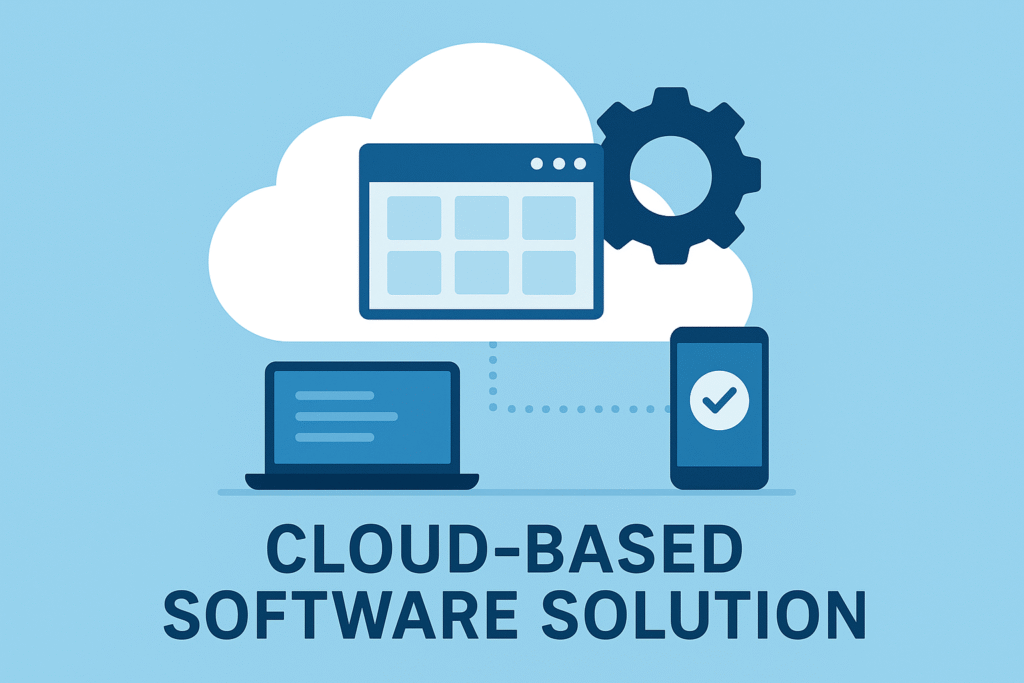
This transformation highlights the benefits of cloud-based software in modern organizations to ditch infrastructure headaches and accelerate innovation. Many businesses also ask what is cloud computing and what is a cloud, because understanding these fundamentals helps them evaluate the right cloud-based software solution for their needs.
Key Cloud-Based Software Benefits for Developers and IT Teams
Scalability & Flexibility
With auto-scaling and pay-as-you-go pricing, cloud solutions like AWS Auto Scaling adapt instantly to demand—ideal for seasonal spikes without overprovisioning. Industries relying on cloud-based payroll software, cloud-based HRM software, cloud-based HRMS software, and cloud-based HR software benefit greatly from this scalability.
Cost Savings & Optimization
By shifting CAPEX to OPEX, organizations cut up to 30% of IT expenses via rightsizing, reserved instances, and FinOps practices. According to Reddit discussions, idle resources can account for up to 25% of waste—highlighting the need for cost audits and selecting the right cloud-based software solution.
Reliability & High Availability
Major providers offer 99.9% uptime SLAs via multi-region failover—ensuring business continuity even during outages.
Collaboration & Remote Accessibility
Tools like Google Workspace and Microsoft Teams enable seamless cross-location communication, eliminating data silos.
Faster Innovation with Continuous Delivery
CI/CD pipelines in cloud platforms accelerate feature rollout and updates—minimizing downtime and lag.
Security & Compliance
Cloud providers adhere to standards like SOC 2, ISO 27017, and HIPAA. Tools like IAM, CASB, CSPM, and SECaaS enhance protection and audit readiness.
Cloud-Based Software Architecture & Benefits Explained
SaaS, PaaS & IaaS Explained
IaaS → Virtual servers & storage (e.g., AWS EC2)
PaaS → Managed dev environments (e.g., Heroku, Azure App Services)
SaaS → Ready-to-use apps (e.g., Salesforce, Gmail)
Understanding SaaS full form (Software as a Service) is critical for evaluating cloud-based software solutions, especially when comparing on-prem applications to clouds and cloud-native tools.
The spectrum moves from fully managed (SaaS) to full control (IaaS).
Multi-Tenant vs Single-Tenant Architecture
Multi-tenant SaaS shares infrastructure while isolating data—scaling better and lowering cost across platforms like cloud-based ERP software, cloud-based procurement software, and cloud-based medical billing software.
Hybrid vs Multi-Cloud Deployments
According to PRWire and LinkedIn discussions, over 90% of enterprises will adopt hybrid cloud or multi-cloud by 2027 for better flexibility and vendor neutrality.
Cloud Migration Strategy & Checklist
- Assessment
- Planning
- Pilot
- Migration
- Optimization
Use tools like AWS Migration Hub and Azure Migrate during deployment of any cloud-based software solution.
Security & Governance in Architecture
- Zero-trust IAM
- Encryption & tokenization
- Network segmentation
- Automated compliance (GDPR, HIPAA, ISO standards)
- Tools: CSPM, CASB, IAM, DLP
Comparison Table: Top Cloud Computing Providers
| Feature | AWS | Microsoft Azure | Google Cloud Platform |
| Pricing Flexibility | Reserved & Spot Instances | Hybrid use benefits | Sustained-use discounts |
| AI & Analytics | Strong ML services | Advanced OpenAI integration | Vertex AI leadership |
| Hybrid Cloud Support | Moderate | Excellent with on‑prem tools | Growing via Anthos |
| Global Reach & Uptime | Industry-leading availability | Global Microsoft backbone | High-security infrastructure |
Leading Tools & Platforms for Cloud‑Based Implementation
- Cloud Providers: AWS, Azure, GCP
- Integration Tools: Zapier, MuleSoft
- Monitoring & Automation: Datadog, Prometheus, Terraform, Ansible
- Security Tools: CASB, CSPM, IAM, SECaaS solutions
Industries also benefit from specialized tools like cloud-based WhatsApp marketing software that enable real-time customer engagement.
Real‑World Use Cases & Industry Examples
- E-commerce: Netflix uses AWS for global streaming at scale
- Healthcare: HIPAA-compliant platforms and cloud-based medical billing software reduce legacy costs
- Finance/Fintech: Multi-cloud improves availability & latency
- Education: SaaS edtech tools ensure scalability & global access
Best Practices to Maximize Cloud-Based Software solution & Benefits
- Always use a migration checklist and pilot test first
- Monitor cloud usage with AWS Cost Explorer or Azure Cost Management
- Harden architecture with zero-trust, segmentation, & encryption
- Use microservices, Kubernetes, and cloud-native computing for scalability
- Choose the right cloud-based software solution for long-term flexibility
FAQ on cloud-based software solution
What is cloud-based software and how does it work?
Software hosted on remote servers, managed by a cloud provider, and accessed via the internet—no infrastructure setup required.
What are the key cloud-based software benefits for small businesses?
Lower costs, scalable plans, and access to powerful enterprise tools like cloud-based HR software or cloud-based ERP software.
How do legacy systems migrate to the cloud?
Via lift-and-shift, refactor, then optimize using tools like AWS Migration Hub.
How is SaaS different from cloud-based software?
SaaS is a subset of cloud-based software—fully managed and ready to use.
Which tools support cloud security and compliance?
CSPM, IAM, CASB, and SECaaS platforms.
Do hybrid and multi-cloud environments improve reliability?
Yes—they improve redundancy, lower latency, and reduce vendor lock-in across all cloud-based software solutions.
How can I optimize cloud costs?
Audit unused resources, use spot/reserved instances, and monitor via FinOps dashboards.
By understanding and applying these cloud-based software solution benefits, your business can stay competitive in today’s digital economy, especially with the rapid adoption of modern cloud computing practices.